Apple Watch battery test: 7+ hours with GPS and heart rate
I wanted a real number. Not Apple's spec sheet. Actual runtime on a worn-out watch, running BackyardPace with GPS and heart rate on the whole time. Here's what happened.
There's a question that comes up a lot from people considering BackyardPace: will my Apple Watch last the race? It's a fair concern. Backyard Ultras go long, and most Apple Watch models aren't marketed as endurance-racing hardware.
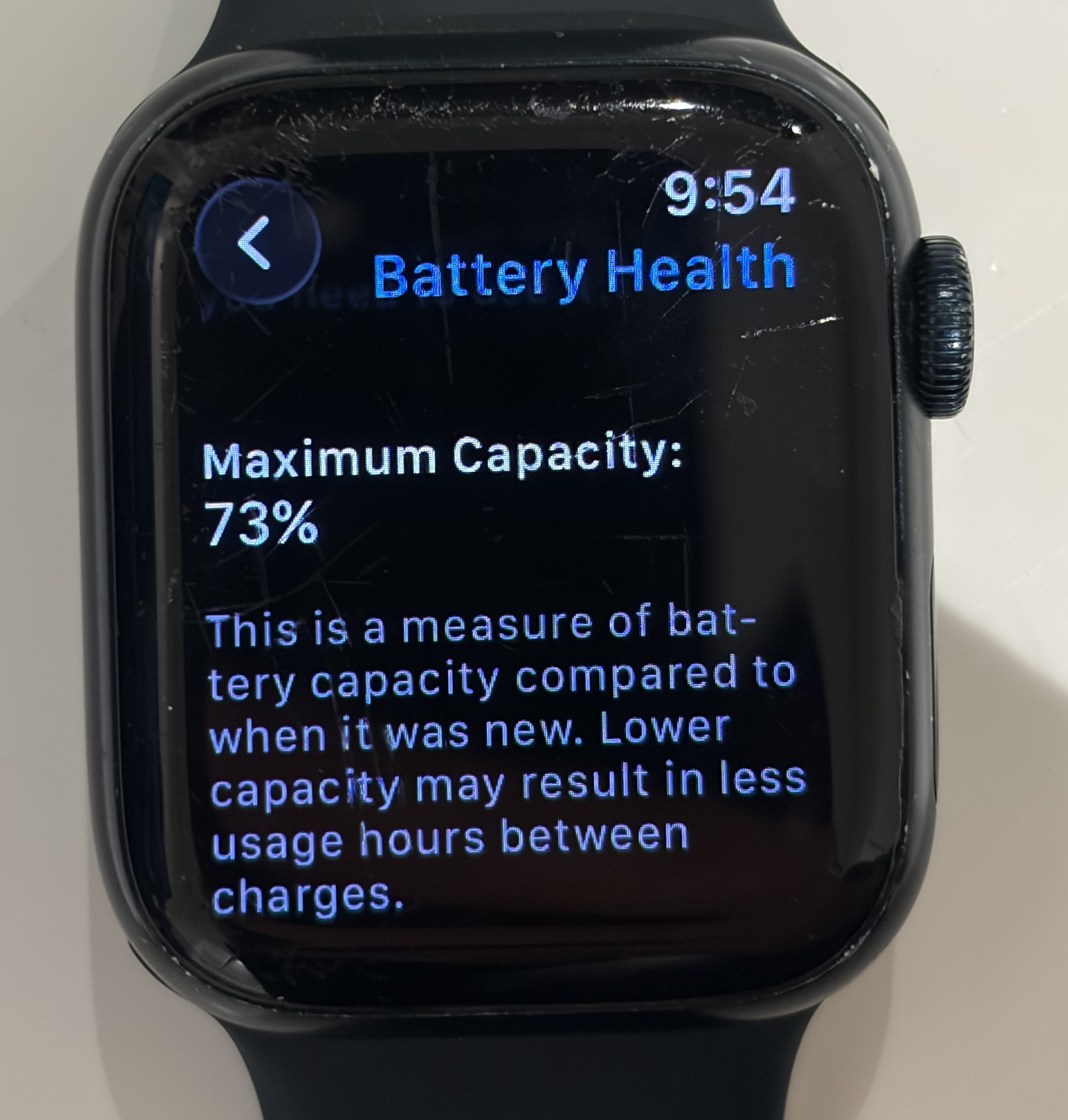
I decided to find out properly. My Series 7 is old: 73% battery health, cracked screen, well past its prime. I set BackyardPace running with full GPS and heart rate tracking and left it going for the day. No charging breaks, no adjustments. Just the watch running as it would in a real race.
The result
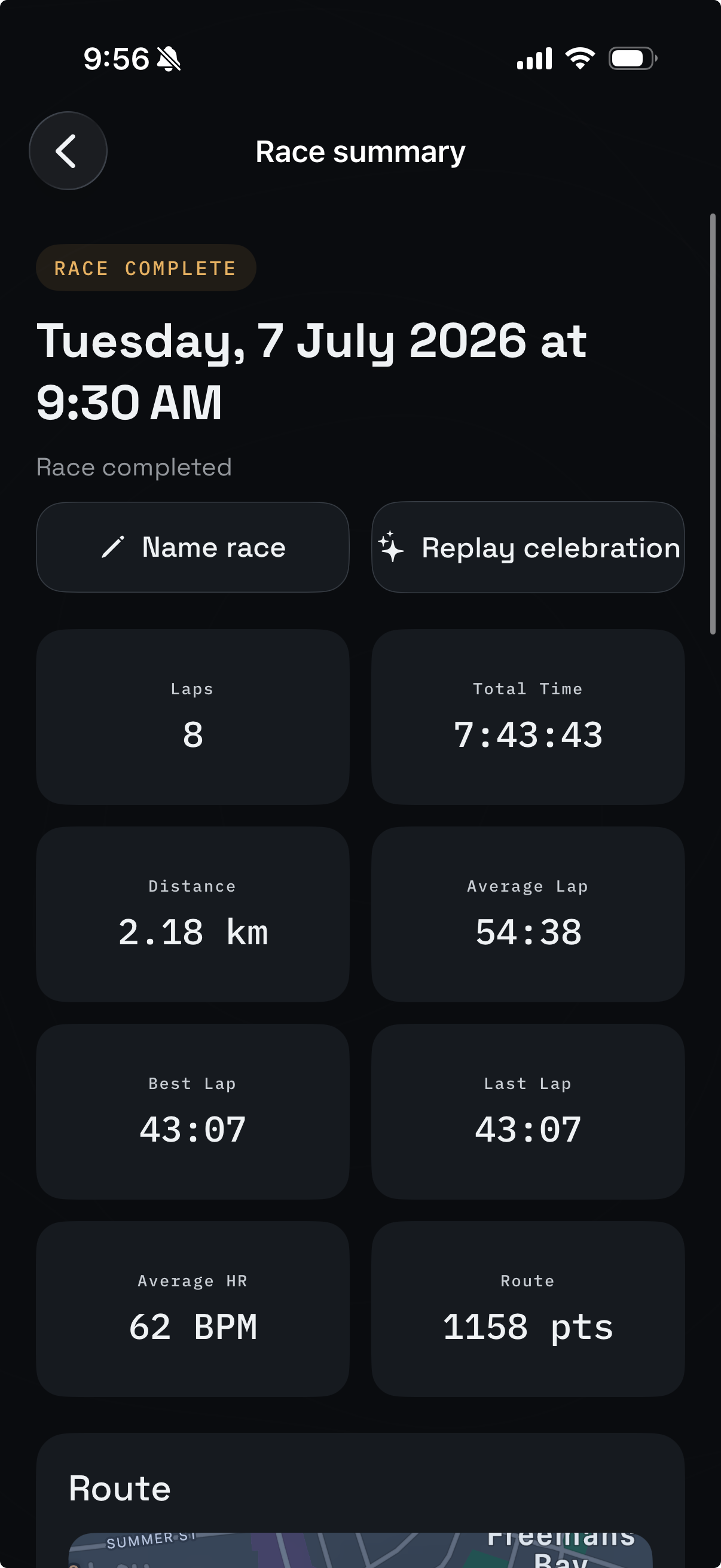
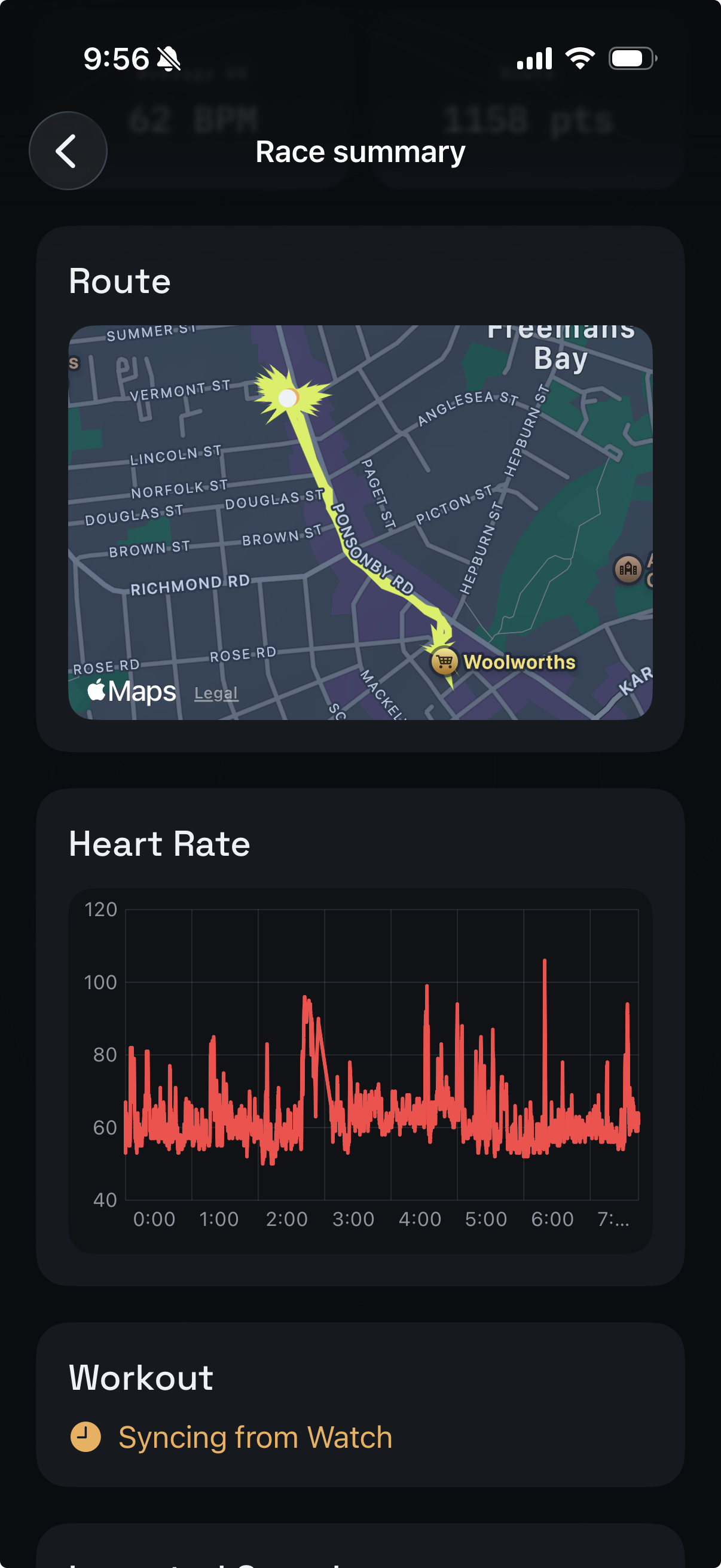
7 hours and 43 minutes. GPS tracking the whole time, heart rate the whole time, 8 laps recorded. The watch didn't give up. I ended the session. On a watch at 73% capacity with no charging intervention at all, that's the floor.
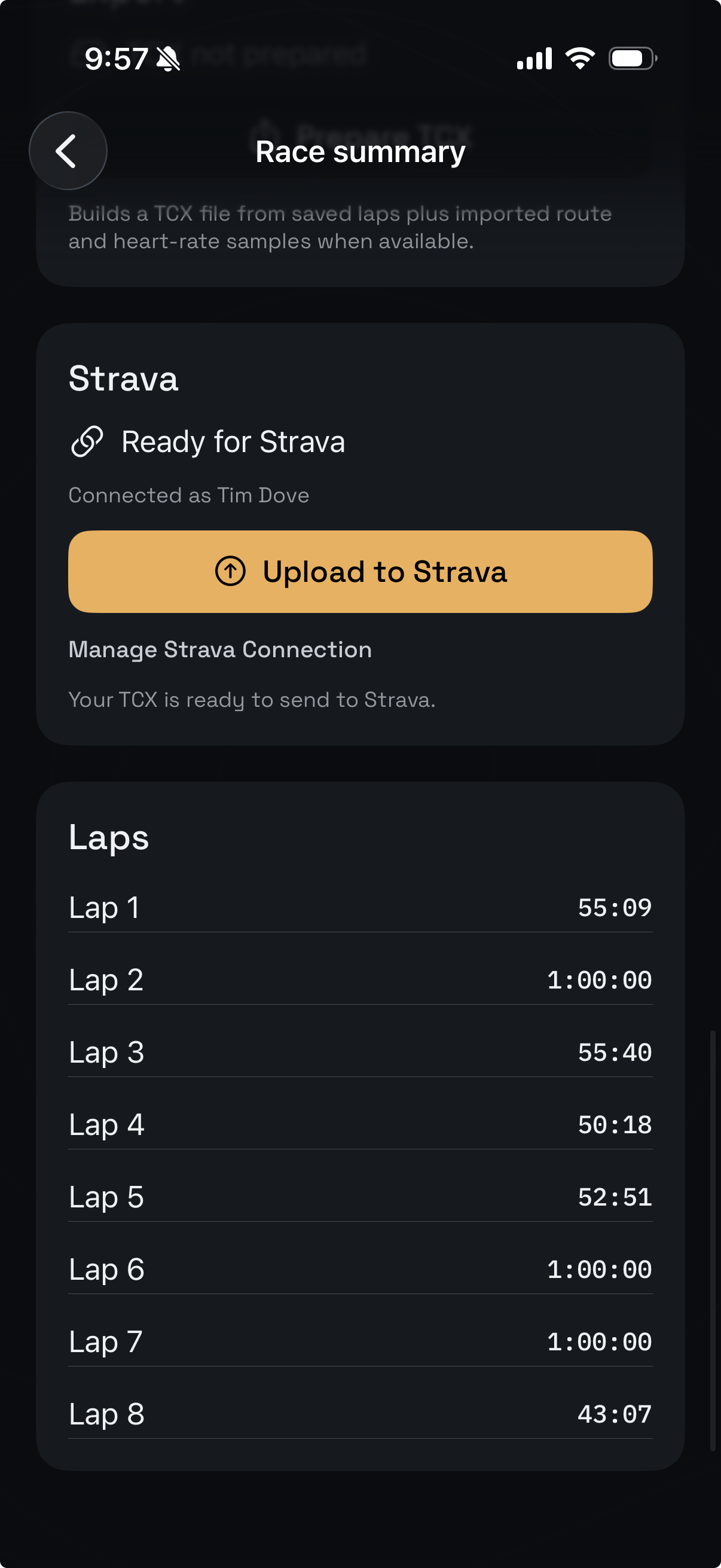
The heart rate data is continuous across the full session, no gaps, no dropout. That matters for a race, where you want the full picture of your effort over many hours, not spotty readings that disappear when things get hard.
What this means in practice
7-8 hours of continuous runtime is enough to get through roughly a third of a serious Backyard Ultra. It's not enough on its own, but it doesn't need to be. With the lap charger method, putting the watch on charge for 7-10 minutes each time you return to the tent, a watch in this condition will run indefinitely. The brief top-up each hour keeps the battery from depleting faster than it's being replenished.
A newer watch with a healthier battery will do better still. The Series 7 at 73% is a worst-case scenario. If you're on a more recent model, or your Series 7 still has 90%+ capacity, you'll have more headroom before you need to start managing it.
The point isn't that you don't need to manage battery life. You do. But a degraded watch running a purpose-built app can get through a very long day, and with a simple charging system at the tent, it can go as long as you need it to.